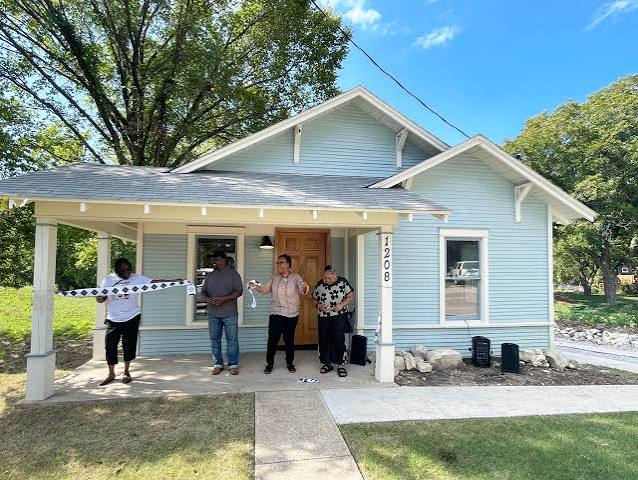
A house is more than its rooms. It is the way the rooms connect, the hallways between them and the habits of the people who walk through. Blue House Diaries has twelve rooms, and new members often treat them like separate websites. They are not. Every diary you post wears a room tag, every room shows up on the front page, and a single conversation can easily travel from the Kitchen to the Living Room in an afternoon. This guide explains how the rooms fit together, why the founder arranged them the way she did and how to use that design so your diaries find the readers who will enjoy them most.
Rooms are tags, not walls
When you look at the bottom of a diary you will see a line that begins with the word Tags, followed by a room name and a link that leads to all tags. That is the whole secret. A room is a label attached to a diary, not a locked space with its own residents. Anyone can read a diary in any room, and anyone can comment. The label simply tells neighbors what kind of conversation to expect.
Thinking of rooms as tags takes the pressure off. If you put a diary in the wrong room, nothing breaks. At worst a neighbor suggests a better home for the next one. The founder admits the room list was built in a scatter shot way, because it is more fun that way, and she has never claimed the system is rigid.
The front page mixes everything
The front page of the house shows the latest diaries from every room together. Each entry carries a title, the name of the author, the date and a short opening, followed by a There’s More link that tells you how many comments the diary has and how many words are inside. A recipe can sit next to a long political essay, and a music post can sit next to a diary about work.
This mixing is deliberate. Blue House Diaries was built because the founder wanted a home where people could talk about their whole lives, not only one or two aspects of them. When a neighbor who normally reads the Kitchen sees a diary from the Basement on the front page, curiosity does the rest. Rooms organize the house. The front page keeps it a single community.
Cross posting between rooms
Some topics deserve two homes. The founder’s own example is the Bedroom, which is the primary home for talk about sex, sexuality and gender issues. A lot of that conversation is also political, and she suggests cross posting those diaries to the Living Room so the political readers see them as well.
Cross posting is a courtesy, not a requirement. If your diary about a school board decision belongs to the Study and to the Living Room, you can mention in the text that it is going to both. Just make sure you are not posting the same thing everywhere for attention. A cross post should always give the second room something it would genuinely want to discuss.
When a diary fits two rooms
Most diaries have an obvious room. A grandfather’s gravel truck belongs in the Attic. A vegetable bed belongs in the Garden. A new scientific find belongs in the Basement. Some diaries are harder, like a story about a pet in the vegetable bed. The Back Yard is the official home of pets, but the Garden would also be glad to see it.
When you are unsure, think about the reader you most want. Who would enjoy a conversation with you about this? If the answer is people who love animals, choose the Back Yard. If it is people who grow food, choose the Garden. You can always say in the opening lines that the diary crosses a border, which lets neighbors from both rooms feel invited.
The Attic and the Hallway
Two rooms are mostly about the people themselves. The Attic stores personal stories, secrets and the things only you can tell the rest of us. Old photos, a mother’s wedding dress and irreplaceable memories belong there. Members have shared stories about grandparents and the ghosts they imagined in a childhood attic, and those diaries drew warm replies.
The Hallway is where members post bios and pictures. Nobody has to, and the picture can be anything you want, though neighbors will assume you are not really a famous movie star. Together these two rooms give the house its sense of history and faces. If the other rooms are the work of the house, these two are the family album.
The Basement and the Study
The Basement is for science, technology and general geekdom. If you have technical information to share, a diary about a fabulous scientific find or a rant about some sort of techland nonsense, it belongs there. The Study is the room for academics, scholars and people who work for a living. Employment, school and even the first chapter of a dissertation are welcome.
These two rooms attract members who like to explain how things work. They are a good place to ask for help, too. A neighbor who is stuck on a technical problem or a workplace headache can post a diary and expect careful, practical replies. The tone tends to be patient, which is exactly what a puzzled newcomer needs.
The Kitchen, the Garden and the Back Yard
Three rooms are about living things and everyday pleasures. The Kitchen is the home of food, from a world famous goulash recipe to photographs of dinner. The Garden covers all things gardening, including how to grow your own food, which the founder hopes everyone will learn more about. The Back Yard handles sports, sporting news and pseudo sports such as poker or cheerleading, and it is also where pets live.
When a pet question came up on the house tour, the answer was simple: pets go in the Back Yard. The founder, who has three cats, admitted she had forgotten to include them on the tour and cheerfully corrected the mistake. That small exchange shows how the house works. Rules are written down, but they are also adjusted in public, with humor.
The Library and the Living Room
The Library is the room for reference materials, reading lists, the Book Club and your own fiction, prose and poems. If you write something you hope people will linger over, post it there. The Living Room is the largest conversation space in the house. In the founder’s family they talk about everything, including sex, religion, politics and surgery, and most of those conversations happen in the living room.
Because of that, the Living Room is where the strongest opinions live. It is also where the house rules matter most. Courtesy, tolerance and respect are easier to say than to practice when a subject is heated, and the Living Room is where members get the most practice. Go there prepared to ask thoughtful questions rather than shout.
The Foyer and the sidebars
The Foyer holds site housekeeping and the Open Thread. When you cannot tell where something belongs, or you have a question about the site itself, start there. Around the main column of the front page you will also find sidebars that connect the rooms: Recent Comments, Recent Diaries and a Recommended Diaries list, along with the poll and the blogroll.
These sidebars are like the little tables in a hallway where mail gets piled. They show you where conversation is happening right now, regardless of room. A newcomer who follows Recent Comments for a few days will meet most of the regular voices, learn their styles and quickly understand which rooms are the busiest at which hours.
A house that gets repaired in public
Right after the tour went up, a member asked why the diary topic menu offered a Back Porch while the house had a Back Yard. The founder had changed the name but thought she had changed the tag, and she called in the geek squad. Within hours another member reported it fixed. Everyone thanked each other, and the room list was consistent again.
That small story explains how the rooms work together better than any diagram. They are maintained by people who notice mistakes, say so politely and fix them. If you ever see something that does not fit, mention it in the Foyer. You will be helping to keep the house in order.
In short
- Rooms are tags, never walls
- Cross post only when both rooms gain
- Pets live in the Back Yard
- Ask about anything unclear in the Foyer